
Treatment as a Time to Reconnect
At KAMI, treatment is viewed not simply as something you receive, but as an opportunity to reconnect with your body. Understanding your current condition, noticing changes, and imagining how you would like to feel can help you become more aware of your body in everyday life.
The aim is not to create a body that depends on continuous treatment. Rather, KAMI hopes to support each person in building a body they can care for themselves. Even a short pause to notice your breathing, posture, or areas of tension can become a meaningful part of daily self-care.
Understand, Feel, and Imagine
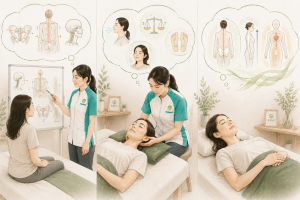 Making treatment time more meaningful begins with understanding. Consider where you feel strain, what movement habits you have, and why discomfort may be appearing. Paying attention to small changes can also help you recognize what a more comfortable state feels like.
During treatment, KAMI encourages you to imagine positive changes such as easier breathing, relaxed muscles, a lighter body, or joints moving more freely. This is not about forcing a result; it is about giving yourself time to notice and connect with your physical experience.
- Understand your current physical condition.
- Feel changes such as easier breathing, relaxed shoulders, freer neck movement, or greater ease while standing.
- Imagine the physical state you would like to experience.
A Quick Check-In with Your Body
A simple check-in can be a useful starting point. You do not need to judge yourself or find an immediate answer. The purpose is to notice your current state and become more familiar with changes in your body.
- Do you still feel tired when you wake up?
- Do you notice uneven shoulder height?
- Do you often feel that your breathing is shallow?
- Do you spend long periods in the same posture?
- Do you find it difficult to notice changes in your body?
Five Gentle Daily Habits
These self-care ideas are intended to help you make time for your body. Choose what feels appropriate for the day rather than trying to do everything at once. Move slowly and stay within a comfortable range; stretching should not be forced or pushed into pain.
The foot massager can be used while relaxing. For the stretches, keep your movements gentle and pay attention to the area being lengthened.
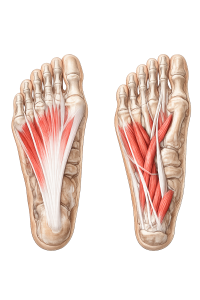
➀ Foot massager — recommended duration: five to ten minutes. Place your feet on the massager and relax. It may feel soothing for tired feet after long periods of standing. Avoid using it if you have unexplained swelling, sudden one-sided swelling or pain, skin abnormalities, circulatory problems, or reduced sensation related to diabetes, and consult a medical professional when needed. It targets the plantar fascia, intrinsic foot muscles, and toe flexor muscles.

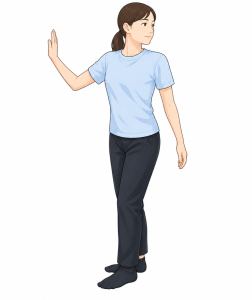
② Wall chest stretch — twenty seconds, two sets on each side. Place your elbow against a wall at a right angle and slowly rotate away until you feel a stretch across the front of your chest. It is a movement for experiencing a stretch across the front of the chest. If shallow breathing persists or you experience breathlessness, consult a medical professional.

③ Seated figure-four stretch — twenty seconds, two sets on each side. Sit on a chair, place one ankle over the opposite knee, keep your back straight, and gently lean forward. It is intended as an exercise for sensing flexibility around the buttocks and hips. If lower-back pain is severe, or if numbness or muscle weakness occurs, stop and consult a medical professional.


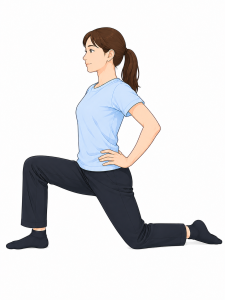
④ Iliopsoas stretch — twenty seconds, two sets on each side. From a half-kneeling position, gently shift your pelvis forward until you feel a stretch at the front of your hip. Use it as a gentle way to move the front of the hip rather than to correct a particular posture.

⑤ Towel neck stretch — twenty seconds, two sets on each side. Place a towel behind your neck, guide it diagonally upward with one hand, stabilize it with the other, and slowly tilt your head. Do not perform it if you have neck pain or numbness, arm weakness, dizziness, headache, or a history of injury. Do not apply excessive force, and stop if symptoms occur.


Start at a Pace That Feels Right
You do not have to do everything every day. One day, you may have time only for your neck; another day, you may focus on your chest or legs. What matters is creating time to connect with your body and continuing in a way that feels manageable.
Rather than waiting until discomfort leads you to seek treatment, try to notice what is happening within your own body. These habits are an invitation to pay gentle attention to yourself and to make body awareness part of ordinary life.


